Planning your first ESL lesson can leave you feeling nervous but that is a completely normal feeling. Almost every new or first time online ESL teacher starts there.
Lesson planning can feel intimidating at first, especially when you think everything needs to be perfect.
The truth is, simple lesson plans work best, especially when you are new. You do not need complicated frameworks or pages of notes to teach a great lesson. You need a clear goal, a few activities, and the confidence to guide your student through them.
This guide will show you how to create your first ESL lesson plan in a simple, repeatable way so you can teach confidently from day one.
This post may contain affiliate links. ThriversHub earns commissions at no extra cost to you when purchases are made through links on this page. For more info, visit the disclosure page.
What Every ESL Lesson Needs
No matter who you are teaching or what level they are at, every ESL lesson needs three core elements. When you understand these, lesson planning becomes a lot easier.
A Clear Objective
Your lesson should answer one question – what should the student be able to do by the end of the lesson?
This doesn’t need to be complicated. Examples include:
- Use five common greetings correctly
- Talk about their daily routine using the present tense
- Ask and answer basic questions about work
A clear objective keeps the lesson focused and prevents you from trying to teach too much at once.
Practice Opportunities
Students learn English by using it, not by listening to long explanations. Your lesson should give them multiple chances to practice speaking, listening, reading, or writing.
Practice can include:
- Short conversations
- Role play
- Fill in the blanks
- Answering simple questions out loud
If your student is doing most of the talking, you are on the right track. ESL learning is most effective when students actively use the language, which is why practice should take up most of the lesson.
Simple Feedback
Feedback helps students improve and builds their confidence. You do not need to correct every mistake. Focus on what matters most for the lesson objective.
Correct gently and encourage often. Let students know what they did well before pointing out what needs work.
A Beginner-Friendly Lesson Structure
Once you know what every lesson needs, you can organize it into a simple structure that works for almost any ESL class.
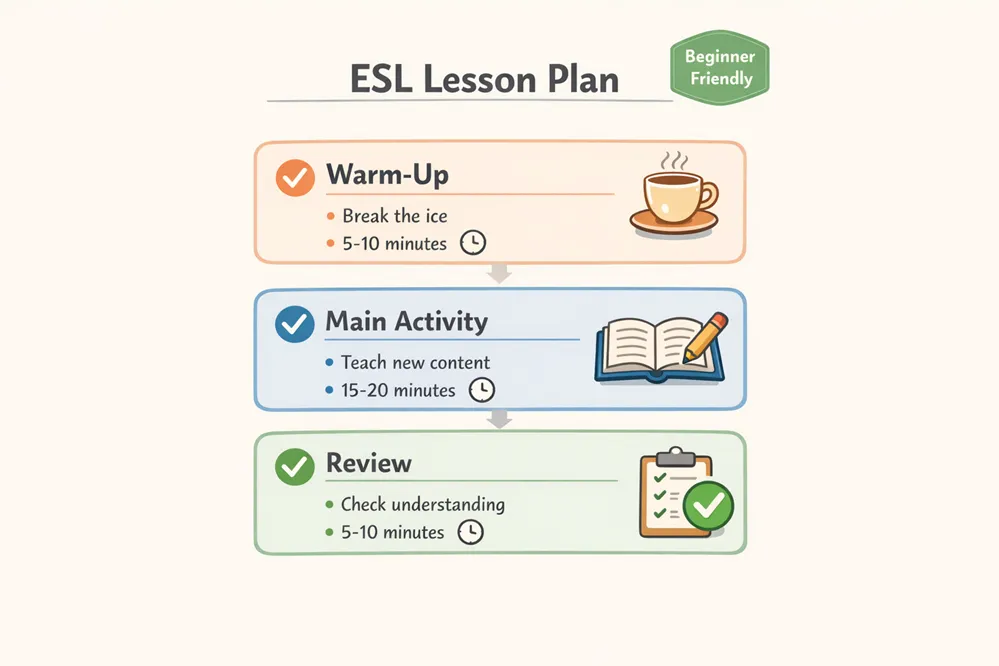
Warm Up
The warm up helps the student relax and switch into English mode. It should be short and easy.
For example, you can try:
- Casual conversation
- Reviewing vocabulary from the last lesson
- Asking simple personal questions
This part builds comfort and confidence before introducing new material.
Main Activity
This is where you focus on the lesson objective. Introduce new words or structures, then guide the student through practice activities.
Keep instructions simple and model examples when possible. If something is not working, adjust on the spot. Flexibility is more important than sticking rigidly to your plan.
Review
End the lesson by reviewing what was covered. Ask the student to use what they learned in a short conversation or quick exercise.
This reinforces learning and helps the student feel a sense of progress, which is key for motivation.
Example ESL Lesson Plans
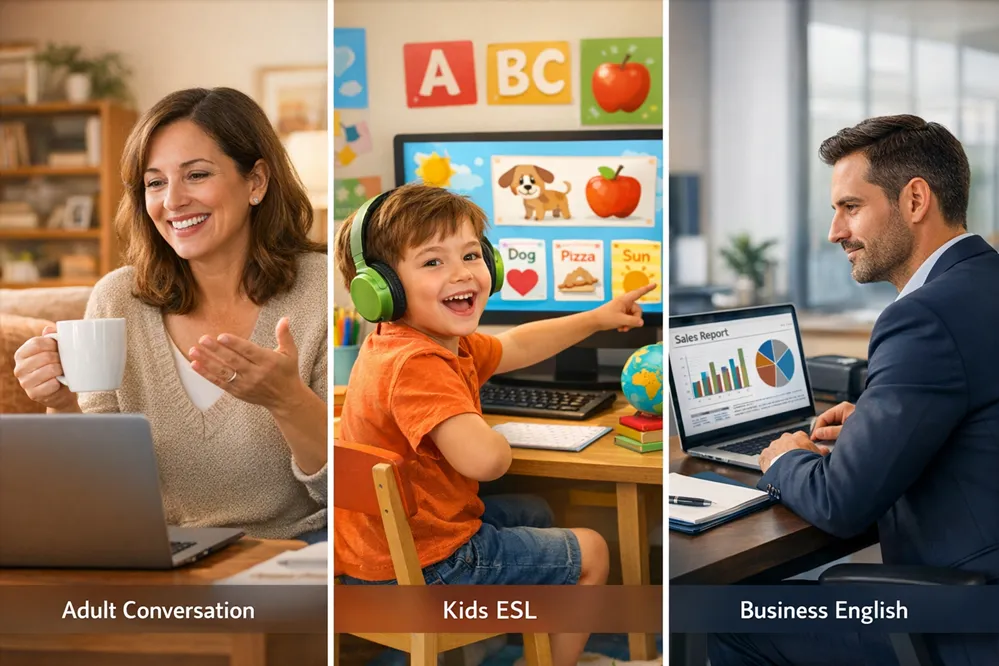
Here are three simple examples to show how this structure works in real lessons.
Conversational English Lesson
Objective: Practice asking and answering basic personal questions.
Warm Up: Casual chat about the student’s day.
Main Activity:
Introduce common questions such as “Where are you from?” and “What do you do?”
Practice asking and answering these questions through short role play.
Review:
Have a short conversation using all the questions covered.
Kids ESL Lesson
Objective: Learn and use animal vocabulary.
Warm Up: Ask the child to name animals they already know.
Main Activity:
Introduce 5 new animal words using pictures.
Practice with games like matching or simple “What is this?” questions.
Review:
Ask the child to name the animals without pictures.
Business English Lesson
Objective: Practice polite phrases for meetings.
Warm Up: Discuss the student’s job and meetings they attend.
Main Activity:
Introduce phrases like “I would like to add” or “Can we revisit this point?”
Practice with short meeting role play scenarios.
Review:
Ask the student to use two phrases in a simulated meeting response.
These structure works well in 25 to 30 minute online lessons, which is common for beginner ESL students.
Using Free Resources Wisely
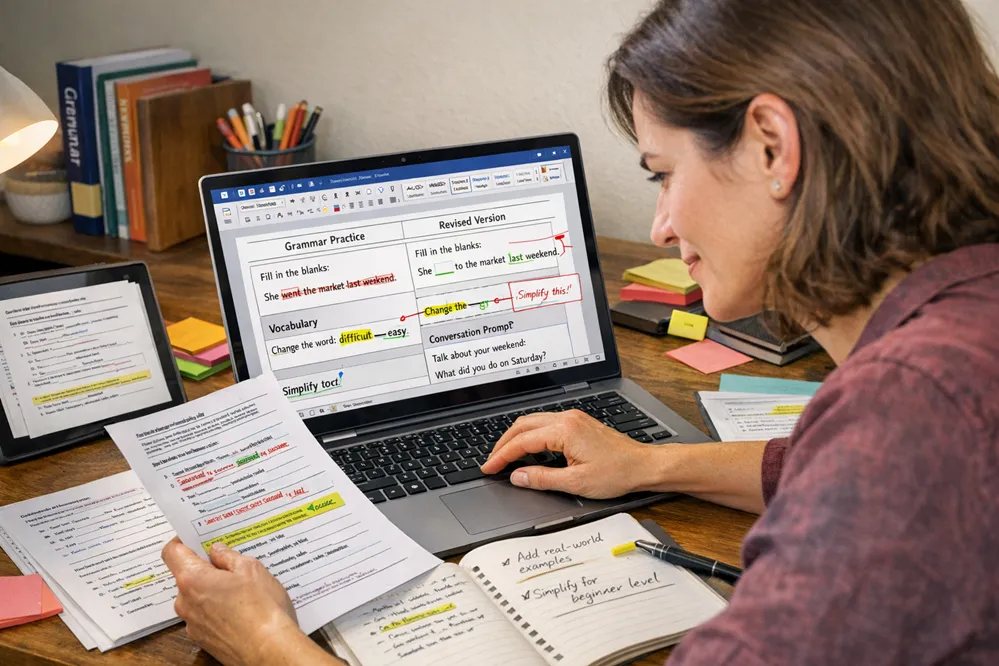
You don’t need to create everything from scratch. Free ESL resources can save time, but how you use them matters.
Adapt Materials to Your Student
Worksheets and lesson ideas are starting points, not rules. Adjust the difficulty, examples, or pacing to suit your student’s level and goals.
If a worksheet feels too long, use only part of it. If it feels too easy, turn answers into speaking practice.
Free ESL resources vary in quality, so not every worksheet will be appropriate for your student’s level or goals.
Keep Lessons Flexible
Real lessons rarely go exactly as planned. Students may struggle with one part or move faster than expected. That is normal.
A good lesson plan gives you direction, not pressure. Your role is to guide, not to perform a script.
If you are teaching online, make sure your basic teaching setup supports flexibility. A reliable microphone, camera, and screen sharing tools make it easier to adapt lessons smoothly. You can go here to see a full equipment checklist to ensure you are set up properly.
Teaching Confidence Comes Faster Than You Think
Your first ESL lesson plan does not need to be perfect. It needs to be clear, simple, and focused on helping your student use English.
Confidence grows with each lesson you teach. The more you plan simply and teach consistently, the more natural it becomes.
Most beginner ESL teachers struggle with lesson planning at first, but those who stick to a simple structure quickly develop confidence and consistency.
If you are building your teaching foundation and want to see how lesson planning fits into the bigger picture, check out my article on how to start your own online ESL teaching business. It ties everything together and helps you move forward with confidence.
You are more ready to teach than you think.