If you are thinking about teaching ESL online, you’ve probably asked yourself this question:
“Do I need TEFL first?”
For a lot of beginners, this single question becomes a wall. They assume certification is a gatekeeper. No TEFL means no students, no income, and no business. So they wait. Months pass. Sometimes years.
The truth is more practical and far less intimidating.
TEFL is not a requirement to start teaching ESL online. It’s just a tool. And like most tools, its value depends on how and when you use it. To see the full scope, make sure you read the article on how to start an online ESL teaching business.
Before you worry about certification, it helps to understand when TEFL is actually required and when it is not. More importantly, you need to understand what students really care about and what you actually need to start teaching today.
When Certifications Are Required
There are situations where a TEFL certificate matters. This is where much of the confusion comes from.
Teaching Platforms
While most large ESL platforms require that you’re a native speaker, some often make TEFL or TESOL certification a requirement.
These companies operate at scale and use certifications as a filtering system. It’s not always about teaching quality but more about compliance, branding, and risk management.
If your plan is to apply to multiple platforms and let them handle student acquisition, scheduling, and payments, then yes, you will likely need a certificate.
In that case, TEFL is the price of entry.
Certain Employers
Some private schools, agencies, or overseas programs also require certification. This is especially common when visas, insurance, or institutional partnerships are involved.
Again, the requirement exists because of systems, not necessarily because certified teachers are better instructors.
This is where many beginners make a mistake. They assume these scenarios represent the entire ESL market when they actually don’t.
Teaching Independently Without TEFL
If you are building your own online ESL teaching business, the rules change.
What Students Actually Care About
Independent students are not searching for your certificate. They are searching for solutions.
They want clearer English.
They want better pronunciation.
They want confidence in interviews, exams, or conversations.
They want a teacher who shows up prepared and communicates well.
Most students will never ask if you have TEFL. They will ask questions like:
- Can you help me speak more naturally?
- Do you have experience with my level?
- How do your lessons work?
This is where tools and preparation matter far more than paperwork.
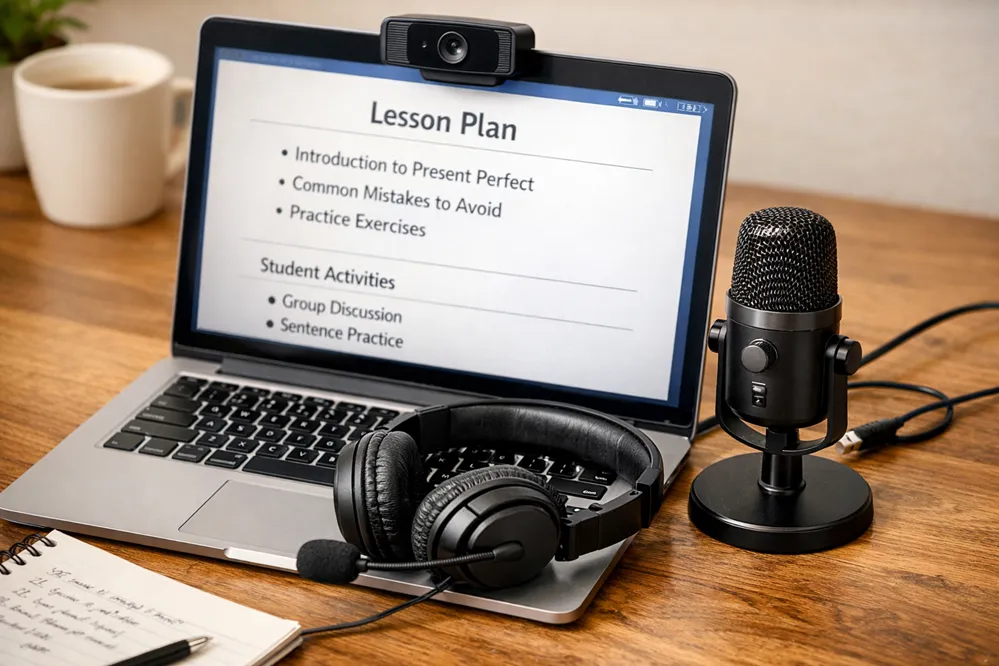
To teach ESL online independently, you need a professional setup, not a certificate on a wall.
That includes:
- A reliable laptop or desktop computer
- A stable internet connection
- A quality USB microphone or headset
- A basic webcam or built-in camera with good lighting
- A quiet teaching space
These are the things students experience immediately. Poor audio will lose you a student faster than missing certification ever will.
Experience vs Paperwork
Experience builds trust faster than credentials.
A clear lesson structure, well-explained corrections, useful feedback, and consistent scheduling all come from teaching, not from waiting.
Many successful ESL teachers started without certification, taught real students, improved their systems, and added credentials later once they knew exactly what they needed.
The Benefits of Getting Certified Later
Just because you don’t need TEFL now, doesn’t mean that the certifcate has no value. It only means that timing matters.
Getting certified later one has it’s benefits.
Confidence
Certification can increase confidence, especially for new teachers who feel unsure about lesson flow or classroom management.
When taken after you already understand how online lessons work, TEFL becomes more useful. You can connect theory to real teaching situations instead of memorizing concepts in isolation.
Niche-Specific Value
Certification is most valuable when it supports a niche. So, for example, teaching:
- Business English
- Exam preparation
- Young learners
- Pronunciation or accent reduction
At that point, certification becomes an enhancement, not a crutch.
You are no longer asking, “Can I start?”
You are asking, “How do I level up?”
That is a much better position to be in.
The Smart Beginner Strategy

If your goal is to start an online ESL teaching business, the smartest path is not waiting.
Teach First
Start by focusing on what you actually need to teach effectively.
Your core teaching toolkit should include:
- A simple video platform like Zoom or Google Meet
- A shared document system for lesson notes
- A basic lesson plan template
- A way to accept payments
- A calendar or scheduling tool
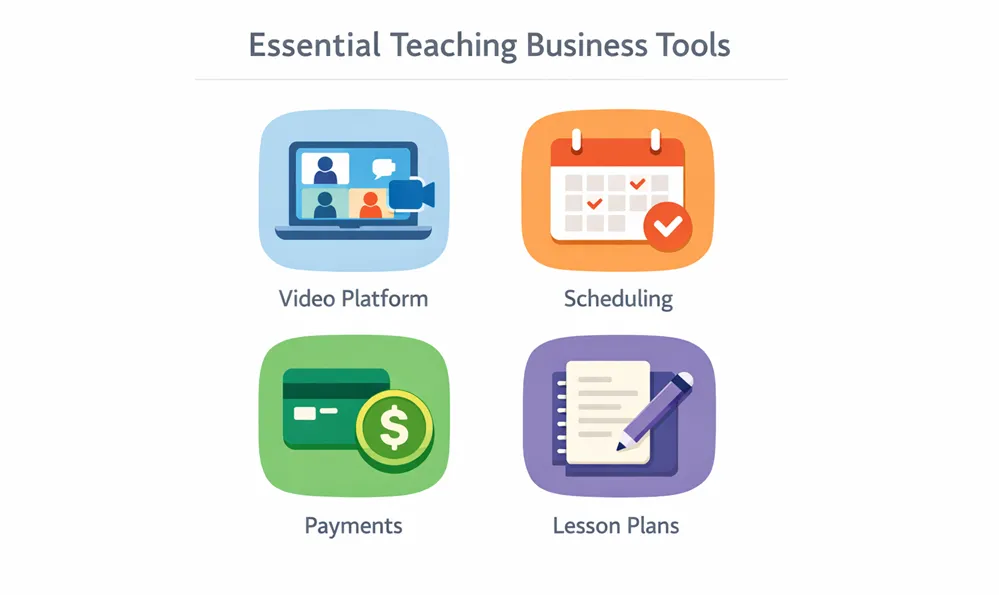
None of these require TEFL.
These tools allow you to deliver real value to real students right now. Teaching even a small number of learners will teach you more than months of preparation without action.
Improve While Earning
Once you are teaching, everything becomes clearer.
You understand what students ask for, see where your lessons feel weak, and you recognize which skills you want to improve.
That is the best time to consider certification, not as permission, but as optimization.
If you want a deeper breakdown of lesson structure and teaching flow, this is where my lesson planning article becomes the natural next step. It helps turn basic tools into confident teaching sessions.
Momentum Matters
The biggest risk in teaching ESL online is not starting without TEFL.
The real risk is never starting at all.
Momentum builds clarity.
Action creates confidence.
Teaching reveals what you actually need.
If you want the full roadmap for turning ESL teaching into a real online business, this article connects directly to the bigger picture. The guide walks through the entire system, from setup to student acquisition, without waiting for permission.
Start with what you have. Improve while you earn. Build forward, don’t wait.