

One of the most common mistakes beginners make in affiliate marketing is signing up for the first program that looks good and jumping straight to promoting it.
The commission rate catches your eye, you grab your affiliate link, and you’re off. It feels productive, like you’re actually making progress.
But not all affiliate programs are created equal, and some will waste your time in ways you won’t even notice until weeks later. Low conversion rates, short cookie windows, payment terms that work against you, or a merchant whose product simply doesn’t deliver. Any one of those can mean you send traffic and see nothing back for it.
The good news is that evaluating an affiliate program before you join doesn’t require any special skills or tools. It just requires knowing what to look for, and that’s exactly what I’m going to show you in this guide.
I’ve been evaluating affiliate programs since 2007, and I still run through the same basic checks today.
By the time you finish reading, you’ll know the right questions to ask about any affiliate program, whether it’s something you found on a network like CJ Affiliate or ClickBank, or a private program run directly by a company you already like. You’ll be able to spot the ones worth your energy and recognize the ones that aren’t.
It takes maybe ten minutes to vet a program properly. Those ten minutes can save you from spending weeks promoting something that was never going to pay off.
Here’s exactly what you should look for.
This post may contain affiliate links. ThriversHub earns commissions at no extra cost to you when purchases are made through links on this page. For more info, visit the disclosure page.
Commission Rate and Structure
The commission rate is usually the first number people look at, and it makes sense why. It’s the most visible part of the deal. But it’s also the easiest to misread if you’re only looking at the percentage.
Here’s a simple example.
A program offering 50% commission on a $17 ebook pays you $8.50 per sale. A program offering 10% on a $300 course pays you $30. The first number looks more exciting, but the second one puts more money in your pocket. So before you get impressed by a rate, pair it with the product price to see what you’re actually earning per conversion.
One-time vs. recurring commissions
Some programs pay you once when someone buys. Others pay you every month for as long as that customer stays subscribed. That second type is recurring commissions and it can quietly become one of the most valuable things in your affiliate business.
Imagine referring 20 people to a software tool that costs $49/month, and earning 30% on each of those subscriptions. That’s around $294 every month from a single batch of referrals, without doing anything extra.
| Product Price | Commission Rate | Your Earnings Per Sale |
|---|---|---|
| $17 | 50% | $8.50 |
| $300 | 10% | $30.00 |
| $97 | 30% | $29.10 |
| $49/month | 30% recurring | $14.70/month per customer |
Recurring commission programs take longer to build up, but they create something closer to passive income than most things in this industry.
When you’re comparing programs, it’s worth knowing which type you’re looking at. Both can be worth promoting, but they serve different goals.
What counts as a decent rate?
This varies a lot by industry. Physical products typically pay between 3% and 10% because margins are thinner. Digital products like courses, software, memberships, etc. often pay 20% to 50% or more because there’s no manufacturing or shipping cost involved. Neither range is automatically good or bad. What matters is whether the math makes sense for the effort you’re putting in.
One more thing to check: some programs have tiered commission structures, where your rate increases after you hit certain sales targets. That’s worth knowing upfront, especially if the entry-level rate looks low. It might get significantly better once you’re sending consistent traffic.
Cookie Duration
When someone clicks your affiliate link, a small file called a cookie gets saved in their browser. That cookie is what ties the sale back to you if that person comes back and buys later. Cookie duration is simply how long that cookie stays active.
Why does it matter?
Because most people don’t buy the first time they visit a page. They browse, they think about it, they compare options, maybe they sleep on it.
If someone clicks your link today but doesn’t buy until next week, you only get credit for that sale if the cookie is still active. If it’s expired, the sale goes untracked and you earn nothing, even though you were the one who sent that person there.
How long is long enough?
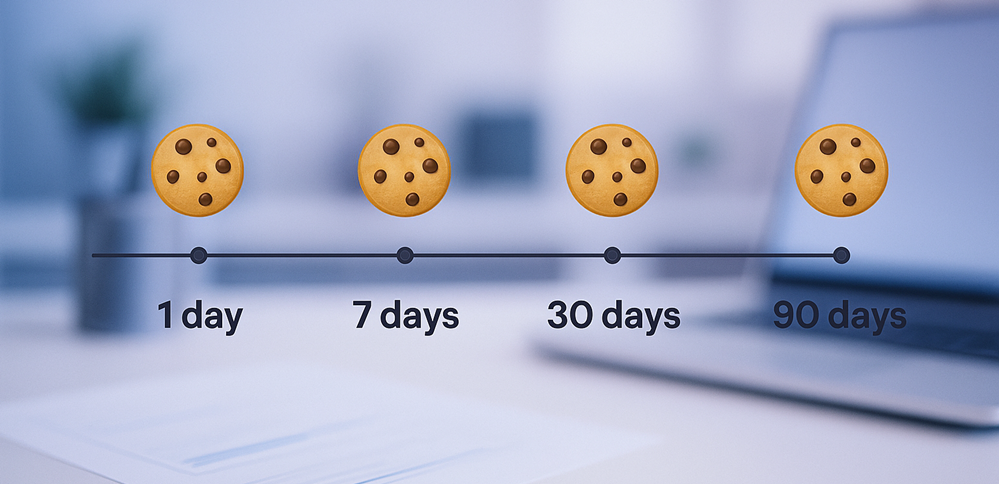
It depends on what you’re promoting. A $10 impulse buy might happen within hours of clicking a link. A $500 course or a business software subscription is a different story. Someone considering that kind of purchase might take days or weeks to decide. For higher-ticket or considered purchases, a longer cookie window directly affects how much of your traffic actually converts into commissions.
A 30-day cookie is a reasonable baseline for most programs. Many solid programs offer 60 or 90 days. Some go even longer.
On the other end, 24-hour cookies exist, and they’re worth knowing about before you commit to promoting something heavily.
Amazon’s affiliate program is the most well-known example of the 24-hour cookie. You send someone to Amazon, they don’t buy within 24 hours, the cookie expires and you get nothing. Given how much people browse before buying, that window is tight. Amazon still works for some affiliates because of the sheer volume of products and the trust people have in the platform, but it’s a trade-off you should go in knowing about, not discover after the fact.
What to do with this information
When you’re looking at a new program, find the cookie duration in their affiliate terms or FAQ. If it’s not listed anywhere obvious, that’s worth asking about before you sign up. A program that makes this hard to find isn’t necessarily hiding something, but transparency about the basics is usually a good sign.
All else being equal, longer cookies give your content more room to work for you. That matters a lot when you’re just starting out and every visitor counts.
The Merchant’s Repututation and Conversion Rate
Here’s something that trips up a lot of beginners. You can do everything right – write great content, rank well, send targeted traffic to an offer, and still earn almost nothing.
If the merchant’s website doesn’t convert visitors into buyers, your effort doesn’t translate into commissions. The program might look great on paper, but you’re essentially sending people into a leaky bucket.
This is why the merchant’s reputation and their ability to close a sale matters just as much as the commission rate.
Look at their website like a potential customer
Before you sign up for any program, visit the merchant’s website as if you’re thinking about buying. Ask yourself these questions honestly:
- Would I buy from this page?
- Is it clean and easy to navigate?
- Does the copy explain what the product does and who it’s for?
- Are there testimonials, reviews, or any kind of social proof?
- Is there a clear call to action?
A poorly designed landing page, vague product descriptions, or a checkout process that feels sketchy are all signals that conversions will be low. It doesn’t matter how many people you send there, if the page doesn’t do its job, you won’t see commissions.
Check what real customers are saying
Spend a few minutes looking up the product or company outside of their own website. Search for reviews, check Trustpilot if it’s listed there, look at comments in forums or on Reddit.
You’re not trying to find a perfect product – those don’t exist. You’re looking for patterns.
- Are there consistent complaints about refunds being ignored?
- Do customers feel misled by what was promised?
- Is the support team unresponsive?
This matters for two reasons.
First, products with poor reputations have lower conversion rates because informed buyers do this same research before purchasing.
Second, your name and your audience’s trust are attached to everything you recommend. Promoting something that turns out to be a bad experience for your readers damages that trust, sometimes permanently.
EPC as a signal
Some affiliate networks display a metric called EPC (earnings per click). It shows the average amount affiliates are earning for every 100 clicks they send to that offer.
It’s not a guarantee of what you’ll earn, but it tells you whether other affiliates are actually making money with the program. A strong EPC on a well-trafficked offer is a reasonable sign that the merchant converts. A very low EPC on a popular offer is worth paying attention to.
Not every program will show you this number, especially private programs outside of major networks. But when it’s available, it’s one of the more honest signals you’ll find.
Payment Terms
This is the section most beginners skip because it feels like fine print. But payment terms are where a few programs will quietly frustrate you, and it’s all avoidable if you know what to look for upfront.
Minimum payout thresholds
Most affiliate programs won’t send you money until you’ve earned a certain amount. $50 or $100 is common and some will set a threshold depending on how you chose to get paid (check, direct deposit, etc).
That’s pretty standard and not a problem for most people. But some programs set that threshold much higher, and if you’re just starting out and building traffic slowly, you could be waiting a long time before you see your first payment.
It’s not a dealbreaker on its own, but it’s worth knowing. If a program has a $200 minimum and you’re earning $20 a month from it, you’re waiting ten months for your first check.
I had this program that I promoted during Black Friday. It was one of those things that I signed up for just to promote their deal. The threshold was $200 and I made $120. I couldn’t put my focus into promoting them consistently on my site so they still owe me that amount for more than 5 years now because they wouldn’t pay until I reach the threshold.
Payment schedules
Programs typically pay on a set schedule – monthly is most common, but some pay bi-weekly or even weekly once you’re established. Some have a delay built in, like net-30 or net-60, which means they hold your earnings for 30 or 60 days before releasing them. This is partly to account for refunds and chargebacks.
Again, not automatically a red flag. But if you’re counting on affiliate income to cover expenses, a net-60 payment schedule on top of a high minimum threshold means you could be waiting a long time between doing the work and getting paid for it.
Payment methods
This one matters more than most people realize, and it matters even more depending on where you live.
PayPal is the most common payment method you’ll see listed across affiliate programs. The problem is that PayPal doesn’t work the same way everywhere. Where I live, you can sign up for a PayPal account and use it to send payments, but you can’t receive money through it. That makes it completely useless as a payout method. And I’ve come across plenty of good affiliate programs that offer PayPal as their only option.
It’s a frustrating situation, but it’s not a dead end. I found a workaround that’s been working for me since 2010, so it’s a solvable problem, just one you need to be aware of before you commit to promoting a program that won’t be able to pay you.
If you’re based outside the US or in a country with PayPal restrictions, this is one of the first things to check. Look for programs that also offer direct bank transfer, Payoneer, or wire transfer as alternatives. Those tend to have broader international reach.
What to look for in the terms
Before joining any program, find their payment page or affiliate FAQ and confirm three things:
- the minimum payout amount
- how often they pay
- what methods are available to you specifically
If any of that information is buried or missing entirely, reach out and ask before you invest time promoting them. A legitimate program will answer that question without hesitation.
For a deeper look on what to look for in the affiliate program terms, you can read the linked article on the topic.
Support and Affiliate Resources
When you join an affiliate program, you’re entering a business relationship. And like any good business relationship, it should work both ways. The merchant wants you to send them customers but the better programs understand that helping you do that well is in their interest too.
The level of support and resources a program offers tells you a lot about how seriously they take their affiliates.
What good programs typically provide
At minimum, you should expect a clean affiliate dashboard where you can track your clicks, conversions, and earnings in real time. If you can’t see what’s happening with your traffic, you can’t improve your results.
For example, I joined an affiliate program a few years ago for a cloud backup service that only gave you an affiliate link – no dashboard, nothing. They just said they’d send you a report when you made sales. This is a setup you don’t want since there’s no way to tell what’s working from what isn’t.
Beyond that, look for programs that provide marketing materials – things like banners in different sizes, email swipe copy, and product images you’re licensed to use. You don’t have to use all of it, but having it available saves time and gives you a starting point, especially when you’re new.
Some programs go further and assign you a dedicated affiliate manager. This is someone you can actually reach out to with questions, ask for custom assets, or negotiate better terms with once you’ve proven yourself. Having a real contact person inside the company is underrated. It means you’re not just a link in their system, you’re someone they have a reason to support.
What a bare-bones setup signals
Not every program with minimal resources is a bad one. Smaller companies or newer programs sometimes just haven’t built out their affiliate infrastructure yet. But if the dashboard is clunky, tracking feels unreliable, and there’s no clear way to get help when something goes wrong, that’s worth factoring into your decision.
Tracking reliability deserves a specific mention here. If a program’s system isn’t accurately recording your clicks and conversions, you could be making sales that never show up in your account. It’s not always easy to detect, which makes it one of the more frustrating problems to deal with.
A quick way to gauge support before you join
If you want a fast read on how responsive a program is, send their affiliate support team a question before you sign up. Ask something straightforward – about their cookie duration, payment options, or whether they have an affiliate manager.
How quickly they respond, and how helpful that response is, tells you something useful. A program that’s slow or vague before you’ve even joined isn’t likely to get better after.
Red Flags To Watch Out For
Everything we’ve covered so far gives you a framework for evaluating a program on its merits. This section is about the other side – the signals that should make you slow down or walk away entirely.
Some of these are obvious once you know to look for them. Others are subtle enough that even experienced affiliates have been caught off guard.
Vague or missing commission information
If a program makes it genuinely difficult to find out what you’ll earn, how you’ll get paid, or what the cookie duration is, that’s a problem.
Legitimate programs have nothing to hide about their terms. Vague commission structures, especially ones that reference “competitive rates” without ever giving you an actual number, are a sign that the details probably won’t impress you once you get going.
No clear way to contact anyone
If the affiliate program page has no support email, no contact form, and no mention of an affiliate manager, ask yourself what happens when something goes wrong.
Because something always eventually goes wrong – a tracking issue, a missing payment, a question about a promotion. If there’s no obvious way to reach a real person, you have no recourse.
Unrealistic commission promises
This one cuts the other way from what you might expect.
Most beginners worry about programs that pay too little. But programs that promise extraordinarily high commissions on products that don’t justify it are worth scrutinizing too.
If something is offering 90% commissions on a product with no obvious business model to support that, dig deeper before you promote it.
Tracking you can’t verify
You’re trusting the merchant to accurately record every click and conversion that comes from your links.
Most of the time that trust is warranted. But tracking failures do happen, sometimes by accident, sometimes not.
A refund policy that works against your commissions
Check whether the program claws back commissions on refunds, and if so, how they handle it.
A reasonable refund policy with commission reversals is normal – products get returned, that’s just business. But some programs have unusually long refund windows, or vague language around when commissions get reversed, that can eat into earnings you thought were already yours.
Your gut reading on the product itself
This last one isn’t a checklist item, but it matters.
If you wouldn’t buy the product yourself, or you wouldn’t feel comfortable recommending it to someone you know personally, that’s worth listening to. Your audience will eventually figure out whether your recommendations come from a real place or not.
The programs worth your time are the ones you can promote without having to talk yourself into it.
Take the Guesswork Out of Finding Good Programs
Knowing what to look for is half the battle. The other half is having the right training and support to put it all together.
Wealthy Affiliate is where I got my own start back in 2007, and it’s still the first place I send beginners who are serious about building something real. The training covers everything from picking a niche to finding and vetting affiliate programs worth your time. There’s also a active community of marketers at every level who give straight answers with no hype and no fluff.
You can join for free. No credit card is required, and the free membership doesn’t expire.
Join Wealthy Affiliate for free and start building the right way.


