Product reviews are the bread and butter of affiliate marketing.
This type of content attracts readers that are ready to buy and converts better than any of the other content types you’ll post on your website. When done right, they are your biggest money-makers.
But here’s the hard truth – most beginner affiliate marketers write reviews that readers simply do not trust.
Think about it. How many times have you read a review that felt fake and pushy?
As consumers, we can usually spot these from a mile away. Yet many new affiliate marketers fall into the same trap when writing their own reviews.
The good news?
You don’t need to be a professional writer to create reviews that convert. You just need to understand what makes readers trust you and what motivates them to click that affiliate link.
In this post, you’ll learn effective ways write product reviews that build trust with your readers and turn them into buyers. I’ll cover everything from research to structure to the words that actually convince people to buy.
This post may contain affiliate links. ThriversHub earns commissions at no extra cost to you when purchases are made through links on this page. For more info, visit the disclosure page.
Know Your Affiliate Product Inside Out

The best practice for doing affiliate reviews is to use the product yourself and know how it works inside out.
When you know the product you’re promoting, you’ll be able to better explain to your audience the good and the bad about it, how it works and how it can benefit them.
But let’s be honest – you probably won’t be able to personally test every product you review, especially when you’re just starting out. That’s okay, but you still need to know the product well.
How to research products you haven’t used personally
There are several ways you can go about researching products that you haven’t used yourself. The goal is to know your product inside out, what works and what doesn’t and how it’s features can solve problems for the customer.
Start by reading customer reviews on Amazon, Reddit, and other platforms where people share honest opinions. Look for patterns in what real users love and hate about the product. Make notes.
Next, watch video reviews of the product on YouTube. These often show the product in action and highlight issues that written reviews might miss.
Finally, check the product website for technical details but take their claims with a grain of salt. As an affiliate marketer, your job is to translate all that marketing language into real benefits for your users.
Find the real problems your product solves
Every purchase happens because someone has a problem they want to solve. Your job is to connect the dots between the product features and those problems.
Ask yourself:
- What frustrations do people have that this product fixes?
- What daily tasks does it make easier?
- How does it save time, money, or stress?
For example, don’t just say a blender has “500 watts of power.” Explain that “the powerful motor crushes ice completely in seconds, which solves the common problem of finding chunks in your smoothies.“
Understand the target customer of the product
Picture the exact person who needs this product.
- What’s their age?
- Income level?
- What are they struggling with?
This mental image will help you write directly to that person. For a baby monitor review, you’re writing for new parents who are worried about their baby’s safety. For gaming headphones, you’re writing for gamers who want to hear every detail in their games without disturbing others.
This is called a customer avatar and you can develop this as detailed as you want so you can understand your ideal customer better.
Your review should speak directly to the specific needs and concerns that your customer avatar experiences.
Quick ways to compare with similar products
Readers are almost always considering multiple options. You can help them compare by creating a simple comparison with 2-3 competing products.
Focus on the 3-5 most important features or benefits that buyers care about. Don’t try to compare every tiny detail since that just confuses people.
For example, if reviewing a fitness tracker, you might compare battery life, water resistance, and heart rate accuracy across the top 3 brands. This gives readers the quick comparison they need without overwhelming them.
Create a High-Converting Review Structure
Your main goal when creating a review is to get your reader to click on your affiliate link with the intention to buy. But first, you need them to actually read the article.
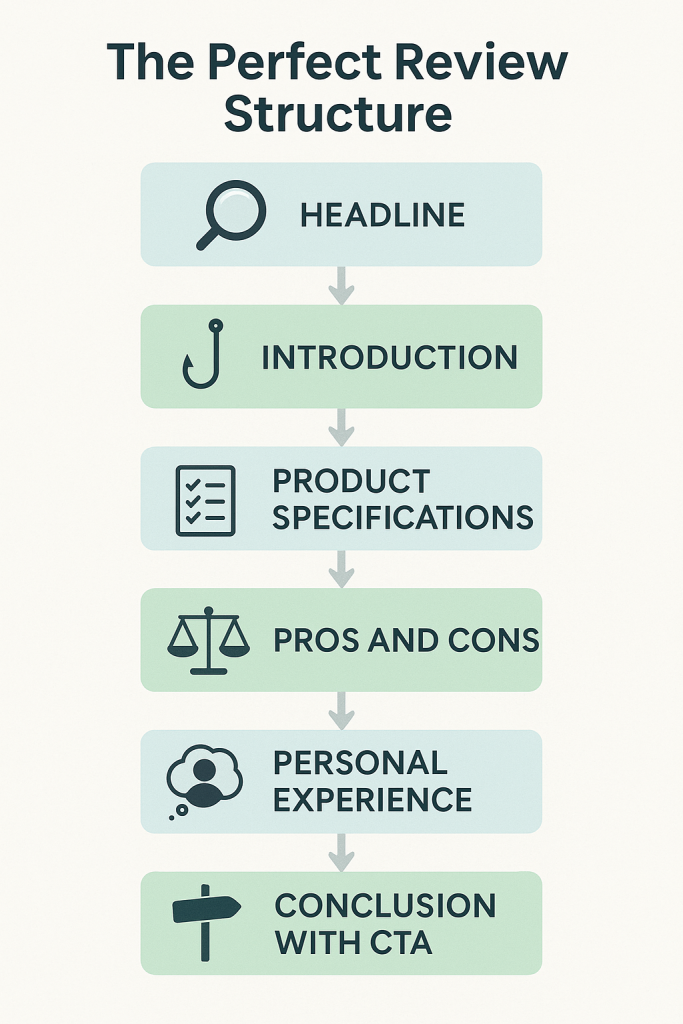
Here’s how to structure your review from getting them to read it to clicking through to make a purchase.
- Create an eye-catching headline
- Write an intro that hooks readers
- Simplify product specs section with benefits for the reader
- Mention pros and especially cons for a fair, balanced review
- Include personal experience section (even if it’s based on research)
- Conclude with clear next steps for the reader
Eye-catching headline formulas that work.
Your headline needs to grab attention and include your main keyword. Balancing SEO-optimization and attracting clicks is a fine art but you can use any of these three formulas that work well.
- [Product Name] Review: Is It Worth It in [Current Year]?
- [Product Name] vs [Competitor]: Which Is Better for [Specific Need]?
- Honest [Product Name] Review: Pros, Cons and My Results
Notice how these headlines promise the reader valuable information, and they’re not just a sales pitch.
How to write an intro that hooks readers
Your first paragraph needs to show readers you understand their problem. Start with a question or statement that makes them think “Yes, that’s exactly what I’m dealing with!”
For example:
“Finding headphones that don’t hurt your ears after an hour is harder than it should be. After trying six different pairs that left my ears aching, I finally found the ComfortPods.”
Then briefly mention what you’ll cover in the review and give a hint at your overall opinion to keep them reading.
Product specs section – make technical info simple
Readers do want to know the technical details, but they don’t want to wade through confusing jargon.
Create a simple bulleted list of the most important specs. Then, explain what these specs actually mean for the user.
Instead of just listing “Bluetooth 5.0,” say “Bluetooth 5.0 – connects instantly and works from up to 30 feet away.“
Pros and cons – being honest without killing sales
Some beginner affiliates worry that if they mention something bad about a product, then their readers are not going to buy.
Every product has drawbacks. Mentioning them actually increases your credibility.
For pros, focus on the 3-5 biggest benefits that solve real problems for users.
For cons, be honest but fair. Mention real drawbacks, but explain who they would and wouldn’t matter for.
For example:
“The battery life is only 8 hours, which isn’t ideal for long trips. However, if you’re just using these headphones for your daily commute or workout, you’ll only need to charge them about twice a week.”
Personal experience section (even if using research)
Readers connect with stories, so include a section about experience with the product.
If you haven’t used it personally, you can:
- Share a specific story from a customer review (giving credit)
- Explain how you would use the product based on your research
- Share the experience of someone you know who has used it
Be transparent, but focus on the practical experience rather than emphasizing that you haven’t tried it.
Conclusion with clear next steps
Summarize your overall thoughts on who the product is right for. Be specific about which type of person will benefit most.
Then, provide a clear next step with low pressure.
For example:
“If you’re looking for noise-cancelling headphones under $100 that are comfortable for long periods, the SoundPro X30 offers the best value I’ve found. Check the current price on Amazon to see if they’re still on sale.”
You can link the works “check the current price on Amazon” with your Amazon affiliate link.
Tips for Building Trust Through Honest Content
Readers aren’t going to click your affiliate links if they don’t trust your review. They’ll simple click away and find another review.
In this section, I’ll give you some tips on how to build trust by simply being honest with your content.
Using “I” statements the right way
Using “I” makes your review feel personal, but be careful how you use it.
Good: “I was surprised by how comfortable these headphones remained after several hours.”
Bad: “I think these are probably the best headphones ever made.”
The first example shares a specific experience. The second makes a huge claim that readers won’t believe.
If you haven’t used the product, use “I” when discussing your research process: “I spent 15 hours researching these headphones, including reading over 200 user reviews.”
Simple language that anyone can understand
One trick I use is to write like I’m explaining the product to a friend.
Avoid technical jargon unless you explain what it means.
Instead of: “The 40mm neodymium drivers deliver exceptional audio fidelity.”
Write: “The speakers inside these headphones are designed to give you clear, rich sound that lets you hear details in your music you might have missed before.”
Avoid hype words that make readers suspicious
Try not to use words like “revolutionary,” “amazing,” “incredible,” and “perfect”. These words can set off alarm bells for readers. They sound like marketing copy, not honest reviews.
Instead, be specific about what makes the product good. Instead of “amazing battery life,” write “the 20-hour battery life easily lasts through two full days of use.”
Being honest about downsides without losing sales
Every product has flaws. Mentioning them actually helps sales because:
- It builds trust (readers know you’re being honest)
- It helps the right customers find the right product
- It reduces returns from disappointed customers
The key is to frame downsides in context. Explain who the downside would matter for and who it wouldn’t.
“These headphones don’t have active noise cancellation, so they’re not ideal if you work in a loud office. However, if you use them mostly at home or in quieter environments, you probably won’t miss this feature.”
Include personal stories or examples
Stories stick in people’s minds better than facts. When possible, include a brief story about how the product solved a problem for you or someone else.
“My neighbor bought these headphones for his daily subway commute. He told me that for the first time, he could listen to podcasts clearly without having to crank the volume to dangerous levels.”
Even a simple example can make your point more memorable: “The ear cushions are so soft that you can wear them for a 6-hour flight without discomfort – unlike those plastic-feeling headphones that make your ears hurt after just an hour.”
Add Visual Elements That Boost Conversions
Adding visual elements to your reviews can make a big difference between turning off your readers and keeping them engaged and informed.
Images and other visual elements help break up text but more importantly, the right ones can help boost conversions.
Types of images to include in reviews
Images help readers connect with the product and understand its benefits.
5 types of images to include:
- Product images from different angles (with proper attribution)
- Size comparison photos (showing the product next to common objects)
- Feature highlight images (showing specific features in action)
- Screenshots for digital products or apps
- Before/after images if applicable
Make sure all images are clear, properly sized, and relevant to points you make in your review.
Simple comparison charts anyone can create
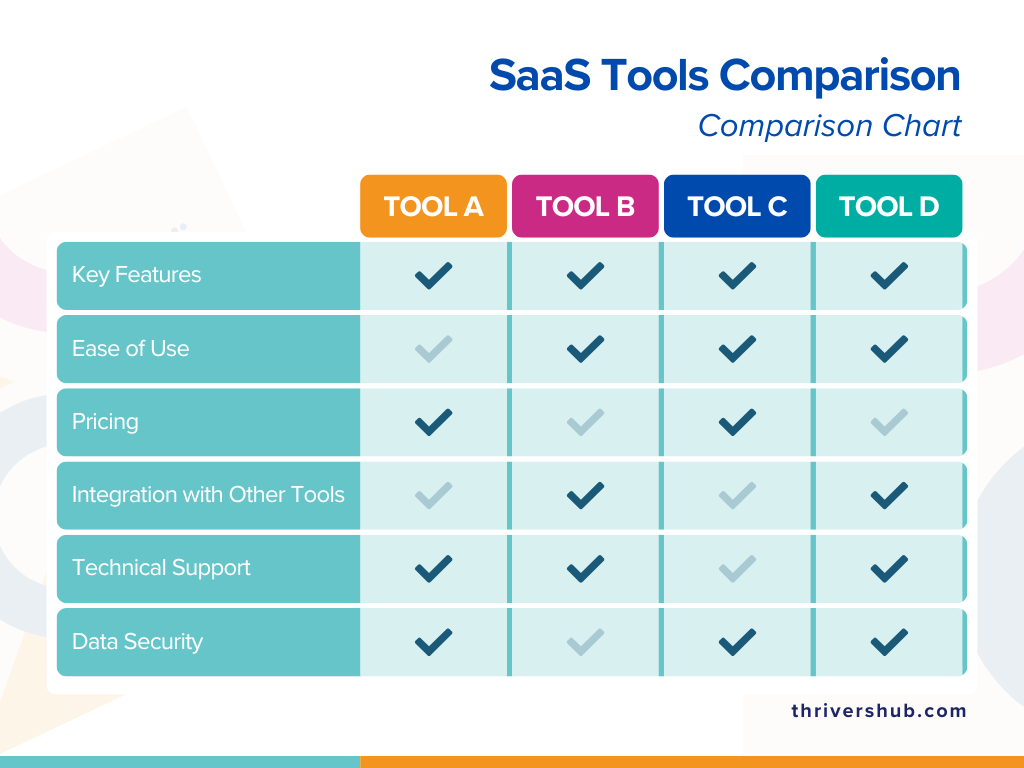
Comparison charts make decision-making easier for readers. You don’t need design skills to create them – even a simple table works.
Compare your main product against 2-3 alternatives, focusing on the 4-5 features that matter most to buyers. Use simple ratings or yes/no indicators rather than trying to include every detail.
You can create these easily in WordPress using a table plugin. I use Stackable but most block plugins should have a similar feature to create a simple comparison table.
You can also find lots of comparison chart templates on Canva, customize them and add to your review.
Using white space and bullet points effectively
Dense text scares readers away. Unlike printed media like newspapers and white papers, you have unlimited space to create your reviews. Break up your content with:
- Bulleted lists for features and benefits
- Short paragraphs (2-3 sentences max)
- Plenty of white space between sections
- Subheadings that make skimming easy
Also remember that many readers will be on mobile devices, so keep text blocks short and scannable.
How to highlight the most important information
Not all information is going to be equally important to the reader. You can help them by:
- Using bold text for key points and product benefits
- Creating callout boxes for especially important information
- Using colored backgrounds to highlight pros and cons sections
- Including summary boxes at the beginning or end of longer reviews
These visual cues guide readers to the most crucial information, even if they don’t read every word.
Writing Call-To-Actions That Drive Results
Effective call-to-actions get your reader clicking towards the next logical step – hopefully to make a purchase on the product you reviewed.
If you did a great job with your review, your reader will already want to take action. Still, you need to nudge them towards checking out what’s on the other side of your affiliate link.
Here’s some tips on how to do this without being pushy.
Writing CTAs that don’t feel pushy
Your call-to-action (CTA) should feel like helpful guidance, not a hard sell.
Instead of: “BUY NOW BEFORE TIME RUNS OUT!”
Try: “Check current price and availability”
Good CTAs focus on the next logical step in the buyer’s journey, not on pushing for an immediate purchase.
Other effective, low-pressure CTAs include:
- “See what other customers are saying”
- “Check for any available discounts”
- “See all available colors/options”
- “Find the right size for you”
Best places to put your affiliate links
Strategic link placement increases clicks without feeling link spam. Some of the best places in your content to place affiliate links are:
- After mentioning a specific benefit that solves a pain point
- Within your pros section
- Near product images
- In your comparison chart
- In your conclusion/summary
- In a “where to buy” section
Each link should make sense in context – don’t just add them randomly throughout your content.
How many links to include without looking spammy
There’s no perfect number, but when including links generally aim for:
- 1-2 links in shorter reviews (under 1,000 words)
- 3-5 links in medium reviews (1,000-2,000 words)
- 5-7 links in comprehensive reviews (over 2,000 words)
Instead of adding more links, focus on making your existing links more effective by placing them at moments when readers are most convinced. See the above section on best places to put your affiliate links for ideas.
Create urgency without fake scarcity tactics
Fake countdowns and “only 3 left!” messages damage trust. I’ve never trusted pages that have the same urgency messages when you refresh the page or visit them later.
Instead, create honest urgency in the following ways:
- Mention genuine limited-time sales if they exist (like during Black Friday or special sales)
- Explain if the product tends to sell out during certain seasons
- Note if the manufacturer has announced a new version coming soon
- Share if prices tend to fluctuate on this item
For example:
“This model typically goes on sale during Black Friday, but also tends to sell out quickly during that time.”
Review Examples
I’ve decided to include some examples of good and bad reviews to inspire and guide how you write your next review.
Before & after: Turning a bad review into a good one
Before (Poor example):
“The XYZ Blender is an amazing kitchen tool that will revolutionize your cooking! It’s incredibly powerful and makes perfect smoothies. Everyone should buy this awesome blender right away! Click here to get this amazing deal before time runs out!!!”
You can see this example uses hype words and pushy sales language. It also doesn’t fully explain the benefits you’ll get from buying the amazing XYZ blender and is overly positive.
After (Good example):
“The XYZ Blender solved my morning rush problem with its 30-second smoothie feature. The 700-watt motor breaks down even frozen berries and ice without leaving chunks, unlike my previous blender that left my smoothies gritty.
While it works perfectly for smoothies and soups, it does struggle a bit with very tough items like certain nuts. It’s also louder than some competitors, so it might not be ideal if you have sleeping children or thin walls.
For anyone who wants restaurant-quality smoothies without spending 3+ minutes blending, the XYZ offers excellent value at its current price point of around $80. Check the current price to see if it’s still on sale.”
Personal stories, simple language with no hype, explanation of benefits to the reader, mention of drawbacks and who the product would most suit are all elements we discussed that would build trust and provide value for the reader.
There’s also a non-pushy call-to-action that guides the reader take the next step.
The “after” example is specific, balanced, addresses real needs, and guides rather than pushes.
3 types of high-converting reviews
Successful review content can take any of the following formats.
Type 1: Problem-Solution Format
Starts by describing a common problem in detail, then explains exactly how the product solves it. Includes specific metrics like “reduced my preparation time from 15 minutes to 3 minutes.”
Type 2: Comparison-Focused Review
Directly compares 2-3 popular options in the same category, with clear charts showing which is best for different types of users. Helps readers self-identify which product fits their needs.
Type 3: Experience-Based Review
Focuses on the actual experience of using the product over time, with updates after 1 week, 1 month, and 3 months. Shows long-term benefits and any issues that arose.
Copy This Template for Your Next Review
For your next review, here’s a simple template that you can follow. It incorporates everything I’ve mentioned in this article and will give you a good structure that converts.
Introduction
- Identify the problem the product solves
- Briefly introduce the product
- Hint at your overall assessment
Quick Specs
- Bulleted list of key features/specifications
- Brief explanation of what these mean for the user
Who Is This For?
- Describe the ideal user for this product
- Explain specific problems it solves for them
The Good (Pros)
- 3-5 biggest benefits, each with real-world impact
- Include specific examples or scenarios
The Not-So-Good (Cons)
- 2-3 honest drawbacks
- Explain who these would and wouldn’t matter for
Real-World Performance
- How it performs in everyday use
- Specific tasks or situations it handles well or poorly
Comparison
- Brief comparison to 2-3 alternatives
- Who should choose this product vs. the alternatives
Price and Value
- Current price range
- Is it worth it? For whom?
Conclusion
- Final assessment
- Who should buy, who should look elsewhere
- Clear next step/CTA
Remember to add images and other visual elements that will help the reader to understand the product better and to break up text.
Conclusion
Writing product reviews that actually convert isn’t about pushy sales tactics or fake enthusiasm. It’s about building trust, solving real problems, and guiding the right customers to products that truly meet their needs.
Remember these key points when writing your next review:
- Focus on how the product solves specific problems
- Be honest about both strengths and weaknesses
- Use simple language that explains what features actually mean
- Include visual elements that make decisions easier
- Place CTAs strategically without being pushy
Start by choosing one product to review using this framework. Pay attention to which sections get the most engagement and which links get the most clicks. Use these insights to keep improving your review style over time.
With practice, you’ll develop your own authentic review voice that readers trust and that leads to consistent affiliate sales.
Bonus Section: Tools & Resources
Here’s a collection of free tools that I use or have used myself that can help you to write better reviews.
- Hemingway Editor – checks the reading level of your content and highlights overly complex sentences. It uses AI to offer suggestions and can replace problematic text in one click.
- Canva – create simple comparison charts and graphics with free templates.
- Grammarly – catch grammar errors and awkward phrasing that might reduce your credibility.
- Google Trends – see if interest in a product is growing or declining.