Have you ever sat down with your yarn, wood, beads or brushes and thought to yourself – “What if I could turn this into real income without dealing with stock, packing, shipping?”
Well, that’s exactly what affiliate marketing lets you do. You promote products you love, help others discover tools or supplies, and get a commission when people buy through your links. No physical store needed. No inventory hassles.
If you love crafting, this path might be the perfect one for you.
In this article, I’ll walk you step by step – from mindset shifts to strategy to tools – on how to grow your hobby into a real affiliate income. By the end, you’ll see how to join a platform like Wealthy Affiliate (for free) to get the training, support, and tools to make it happen.
This post may contain affiliate links. ThriversHub earns commissions at no extra cost to you when purchases are made through links on this page. For more info, visit the disclosure page.
Why Affiliate Marketing Works For Crafters
Crafting is a huge hobby that encompasses many things. Maybe you make handmade jewelry, pottery, knitting and crocheting, woodworking – or something else that you make with your hand.
According to recent stats, nearly 50% of people in the United States say they do some type of arts and crafts.
And, online sales of hobby & craft supplies in the U.S. topped $22.2 billion in 2024.
What this means is that people are looking for supplies, tools, patterns, kits, or even tutorials. Being an affiliate marketer means you get to be the trusted one who points them in the right direction and earn commissions in the process.
Affiliate Marketing Fundamentals

So let me back up a little and explain what affiliate marketing is all about.
By definition, affiliate marketing is when you promote someone else’s product (via special links), and when a visitor buys through your link, you earn a commission.
It’s a simple business model that many big brands like Amazon, Etsy, Cricut, BLICK, and other craft-oriented suppliers participate in. You sign up with them, grab a special link they provide and promote it to people who are looking for craft products.
Compared to selling your own physical goods, affiliate marketing frees you from:
- managing inventory
- shipping and handling
- product sourcing
- customer service
All of those things are done by the product owner or brand. Your job becomes talking about what you know, recommending tools, writing tutorials, and building trust.
It’s a Scalable, Flexible Path
One of the best things about affiliate marketing is that you can do this around your schedule. You can start small (maybe 30 minutes a day) and grow.
You can also scale – your potential is not capped by how many handmade items you personally make or ship.
Plus, many affiliate programs offer recurring commissions (subscriptions, reusable supplies) or high-ticket items (woodworking tools, specialty machines). The more you level up, the more your income can grow.
Things You Should Know Before You Start
Before you dive into the content, there are some things you need to know before you get started with affiliate marketing.
These things will help you to get your foundation right and you can go into it with the right mindset.
Treat Affiliate Marketing Like a Business
This is not another hobby that you’re picking up. It’s a serious business that big brands and other affiliates invest a lot of money into.
That shift in thinking matters a lot. You’ll invest time, learn marketing, build systems. It’s work, but it’s work you can enjoy.
Pick Your Niche
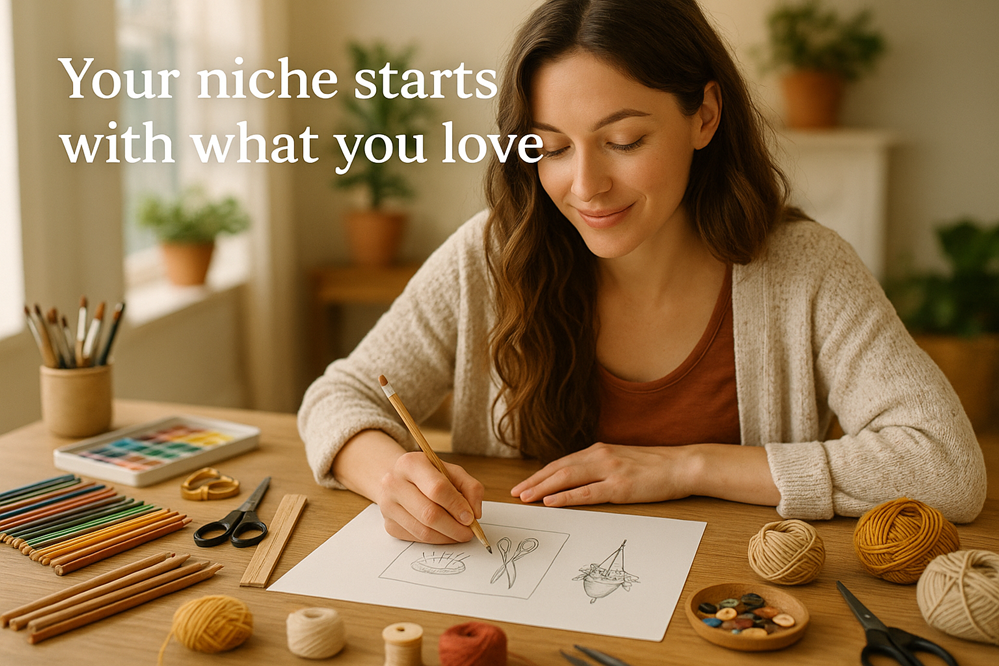
As a beginner, you don’t want to build an affiliate marketing around “crafts”. It way too broad.
Instead, you should narrow down and choose a target audience that’s a bit more specific.
- Knitting for beginners
- Resin jewelry making
- Woodturning for home decor
- Watercolor journaling
- Mixed media scrapbooking
When you focus, people see you as an expert and it’s easier for you to reach your audience. It also helps with content ideas and affiliate product selection.
You’re Helping, Not Selling
A lot of beginners make this mistake. I made it too when I was a beginner.
Understand that your goal is to help people, not sell. Selling is the responsibility of the brand you’re promoting. Your job is to teach, inspire, solve problems. When people trust your recommendations, they click your links and buy.
Set Realistic Expectations and Goals
Affiliate marketing is not “get rich quick.”
Most successful affiliates started small, built over months or years. Be consistent, experiment, and learn.
Building Your Platform and Content
So, you have your niche and the right mindset. Now comes the fun part – building your platform and creating content.
You need to choose a home-base where people can see what you have to say about craft. Your message has to align with what they’re searching for. When this happens, your audience will follow.
Some common channels to choose from:
- Blog/website
- YouTube channel
- A Facebook page
- TikTok / Instagram / Pinterest (social media)
- Email newsletter
Many affiliates use a combination – blog + YouTube + email. The blog acts as your anchor (so links are yours, not social).
How To Choose Affiliate Products to Promote
Another important aspect of affiliate marketing is choosing which craft affiliate programs to promote.
Here are a few tips to help you choose:
- Promote products/tools you already love or use.
- Choose programs that have fair commissions, good reputations, decent cookie periods.
- Focus on complementary products (not random). If you teach knitting, link yarns, needles, patterns.
- Start with a few solid programs so you can learn what works.
Some affiliate programs you might want to try within the craft space:
These programs will let you promote products that your audience already wants. However, depending on your niche and the topic you’re writing about, you might want to search for the best offers within that space.
Create Affiliate-Friendly Content
Whether you’re creating blog articles, videos or other types of content, you should be helpful and engaging. Your content should be centered around specific problems and desires of your audience.
The best content for earning commissions should lend themselves naturally to linking to affiliate products. The examples below are helpful and give you the chance to place your affiliate links.
- 5 Best Yarns for Beginner Knitters + Why I Love Them
- Woodworking Tools Under $100 for Your First Projects
- Step-by-step Tutorial: How I Made a Resin Pendant, and the Materials I Used
- Supplies Breakdown: Resin, Molds, Pigments – All the Gear I Use
Each piece of content gives you an opportunity to link to relevant products. If someone reads and buys, you get credit.
SEO, Pinterest and YouTube for Traffic
Getting people to visit your articles leads to clicks and earnings. This is called traffic and without it, you’re basically just talking to yourself.
To drive traffic, you’ll need a few of the strategies I’m going to show you. Many successful affiliates use a combination of the following:
- SEO (Search Engine Optimization) on your blog
- Pinterest – visual search engine that is great for crafts.
- YouTube – video search engine perfect for visual learners
My favorite here is SEO and blogging. It’s free traffic and each piece of content you create adds to your traffic over time. Many affiliates also rely heavily on SEO.
I also use Pinterest for traffic. This channel is huge for craft niches because people go there for inspiration and projects. If you pin well and link to your tutorials or blog, that traffic can lead to sales.
YouTube is the second most visited website in the world so everyone knows about this traffic channel. It’s another great visual tool – one where you can post tutorials, do tool reviews, project demonstrations, and more. Here are 32 crafting video content ideas you can try.
Build an Email List from Day One
Don’t skip email. You can use a free or low-cost email provider and offer a lead magnet (a small freebie people want, like a PDF checklist, mini tutorial, template). Doing this gets people onto a list where you can then:
- send them new content
- promote affiliate offers they’re interested in
- build stronger relationships
Affiliate marketing and email is a very powerful combination so don’t count it out. You should be building an email list from day one.
Growing From a Side Business To Full Time
Many people start affiliate marketing while they’re doing their 9-5 jobs. It’s a great side business to start but it can scale to full-time income after a while.
Once you’re getting traction, here’s how to scale up.
Track What Works and Optimize
Knowing what works can help you to focus more on specific content, or a certain affiliate program or product. This is why you need to track everything.
To do this, you need to:
- Use Google Analytics (or similar service) to see what posts drive traffic and sales
- See which affiliate links are converting well
- Double down on top-performing content
- Delete or update under-performing content
Promote Multiple Affiliate Programs
Don’t rely on just one program. You don’t want to risk your income being wiped out if this affiliate program closes (which they sometimes do), or even decides to cut commission percentages.
Always try to promote complementary ones. Maybe digital products, tools, kit suppliers. This reduces any risk.
Create Bonus Content and “Funnels”
Funnels help you guide people from being casual readers to active buyers. Here are some examples of how you can scale by using funnels.

- Create a free tutorial where you collect emails for access → Send them an email series to demonstrate expertise and build trust → Send affiliate product suggestions after the series is complete.
- Create a video tutorial on YouTube → Send them to your blog post where you have related affiliate links.
- Bundle resources (for example – “Resin starter kit + my favorite pigments”)
These are all helpful and valuable ways to move people towards being a part of your owned audience or becoming a buyer.
Affiliate Marketing + Your Own Products
As an expert in crafts, you can move towards creating your own products while still recommending products. This hybrid model is great for scaling because you can now recommend products that you own and keep 100%.
Examples of products you can create are:
- PDF books
- Digital patterns
- Online courses
- Bundled templates
- Communities
These can complement your affiliate income. You can promote your own product when applicable and still continue to promote the affiliate offers.
Outsource and Streamline
Another thing you might want to do as you grow and scale your affiliate business is to hire help where it makes sense.
For example, consider these:
- Virtual assistant to delegate tasks
- Content writer to create relevant and high-converting content
- Pinterest manager to manage this traffic channel.
By outsourcing, you can free up your time from repetitive tasks to focus on strategy and creating.
You can also consider ways in which you can make use of generative AI (like ChatGPT and various other AI tools), to help you do things faster and easier.
Now, all of this sounds great, but let’s be honest, it’s not always smooth sailing. There are a few common roadblocks that stop most people before they even get started.
Let’s talk about those next, and then I’ll show you the system I use to help people push past them.
Common Challenges and How To Beat Them
Ok so let’s talk about some roadblocks you’ll face, and how to push through them.
| Challenge | Solution |
|---|---|
| Low initial traffic | Use Pinterest, YouTube, consistent posting, collaborations |
| Not enough clicks / conversions | Improve content, try different products, test calls to action |
| Fear of promoting “just for money” | Be honest, always recommend quality product, add value first |
| Technical overwhelm | Use training, community support, and step-by-step platforms (like Wealthy Affiliate) |
| Burnout | Schedule, batch work, take breaks, stick to your zone of creativity |
Many successful affiliates will tell you they had months of slow growth. Persistence wins.
Now that you know the main obstacles, let’s look at the system that removes nearly all of them. It’s called Wealthy Affiliate, and it’s where a lot beginners turn to help getting started every day.
Using Wealthy Affiliate To Get Started
Here’s where I get real. Joining a strong training & support community makes all the difference.
I know this because I’ve been a member there since January 2007. The platform helped me to understand how affiliate marketing really works and I started earning a full time income just 5 months after joining.
Today the training is completely different (we’re in 2025 – so much has changed) but the platform is still very much alive while their then competitors are non-existent.
If you’ve never heard about Wealthy Affiliate, I’ll tell you below how you can use it to launch your affiliate business the right way.
What Is Wealthy Affiliate?
Wealthy Affiliate is a complete, all-in-one affiliate marketing training platform. You’ll find:
The best part is you can join for free and access the Starter training to launch your craft affiliate website. You’ll get 2000 free AI credits to use the tools inside the platform.

How Wealthy Affiliate Helps Crafter-Affiliates
There are thousands of students on Wealthy Affiliate and they’re all working in a lot of different niches. I know a guy who loves guitars, one who blogs about film-making, and another who can’t stop talking about basketball training for teens.
Wealthy Affiliate can also help crafter-affiliates and I’ll show you how.
In the core training, you’ll see how to properly select a niche within the craft space. This could be related to the craft you already do and love or something related. Or an entirely different craft that you’ve always wanted to learn.
You will also learn more about how to do SEO (search engine optimization) and how to create affiliate content that makes sales.
For both niche selection and creating content, Wealthy Affiliate offers AI-powered tools that make each task easier and faster.
Technical support is also something that you can expect so you don’t get stuck while building out your website.
There is also the community of people from all over the world doing what you’re doing. You’ll see others who are also promoting in craft and DIY niches too. This sense of “you are not doing it alone” provides accountability and motivation which are important to your success.
What To Do Once You Join
When you join for free through my affiliate link, you get 2000 AI credits worth $10. We’re automatically linked so I’ll know that you are my referral. I make it my responsibility to offer whatever support I can to all of my referrals. So come to my profile and say hello (my profile here).
Here are four things you should do once you join Wealthy Affiliate.
- Go through the starter training (focus on niche, website setup, content creation)
- Build your Business Hub (which includes your website) and content around your craft niche
- As you publish content, apply what you learn to drive traffic
- Interact with the community, ask for advice, test what works
Wealthy Affiliate isn’t magic and it won’t do the work for you, but it speeds up your learning curve and gives you a roadmap.
Your 90-Day Action Plan
Ready to do this? Here’s a simple action plan that you can follow for the next 3 months to build your craft affiliate business.
Week 1-2
- Decide on your craft niche
- Join Wealthy Affiliate for free
- Set up your Business Hub (website + hosting, done-for-you research and content ideas)
- Follow the training to create basic site structure and theme
Week 3-6
- Identify 3-5 affiliate products you can recommend (you can use the affiliate programs tab inside your business hub as this is already done for you)
- Write 5-10 blog posts/tutorials around these products
- Create your free lead magnet and setup email tool
Week 7-10
- Promote content on Pinterest, social media
- Pin consistently, engage with craft communities
- Continue writing content
Week 11-14
- Monitor analytics to see which posts perform best
- Add more posts in those directions
- Experiment with new affiliate programs
After 3 Months (Weeks 15-90)
- Grow your email list
- Start small campaigns and promos
- Consider adding your own digital product
- Keep optimizing and scaling
With consistent effort, you’ll start seeing extra income in months 4-6, and real growth by year one.
Why Many Hobbyists Never Try (and How To Avoid That Trap)
If you start with the right mindset, you will be ahead of so many who would like to have a successful affiliate business but never gave it a fair shot.
You might recognize these thoughts:
- “What if I fail?”
- “I’m not techy enough.”
- “I don’t want to push products.”
Every successful affiliate began with the feeling of uncertainty. The difference is they started. They leaned into the learning, used step-by-step systems, and kept going.
And yes – you can remain authentic and helpful. You don’t have to “hard sell.” Your passion for crafting gives you credibility. Share, teach, and recommend only what you believe in.
Get Started Today
Your craft, whether it’s knitting, painting, woodworking, jewelry, scrapbooking – holds more earning potential than you probably realize. You don’t need a warehouse, a huge investment, or wholesale suppliers. You just need creativity, consistency, and the right knowledge & system.
Here’s a simple immediate action you can take to start building a profitable affiliate business:
- Go join Wealthy Affiliate (free) and start the beginner training right now.
- Choose your craft niche and pick 3 affiliate products you believe in.
- Draft your first content idea – a tutorial or tool review.
In six months, when you look back, you’ll see how far you’ve come.
Click here and join Wealthy Affiliate for free, and let me help you build a sustainable affiliate business around your craft passion. There is absolutely no risk, just roadmap, support and community.
I believe in you. Let’s get your craft doing more than just bringing joy – let’s turn it into income.